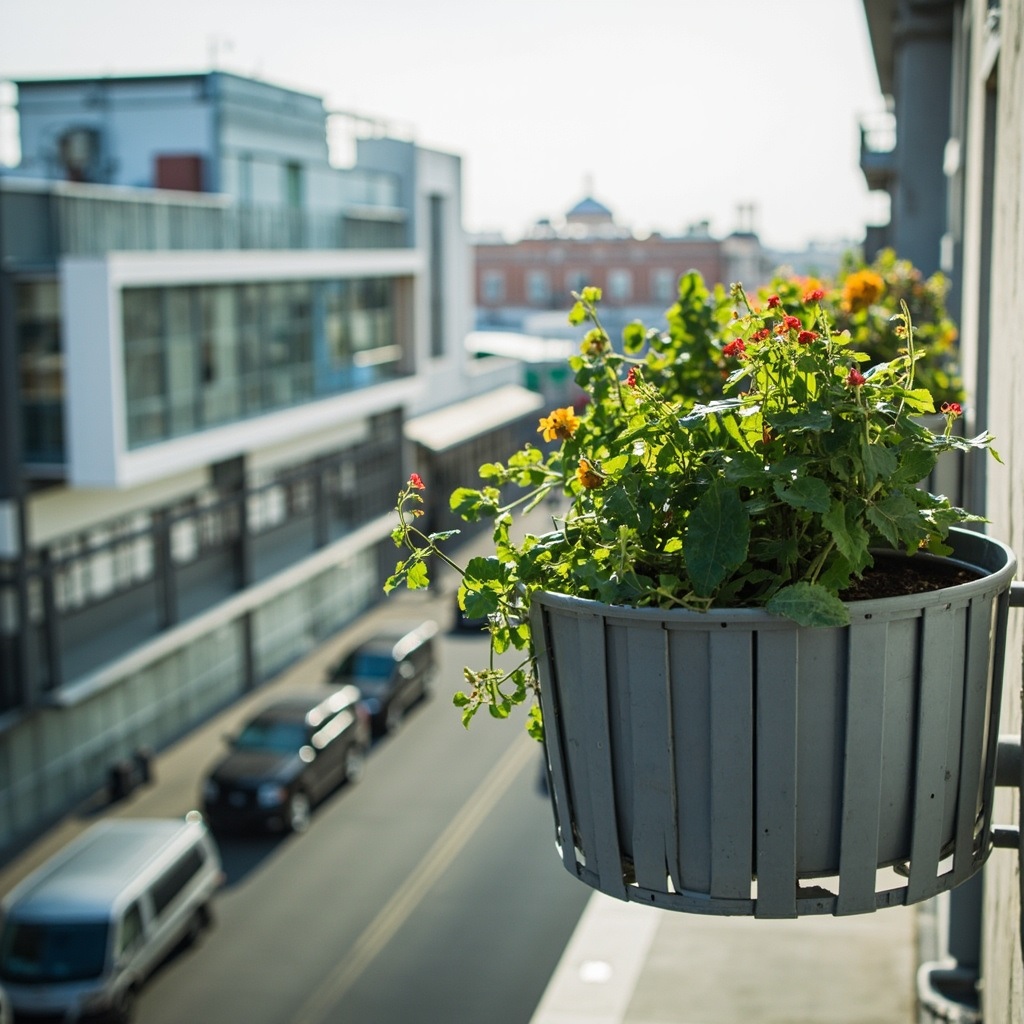
 You love your balcony. That cantilevered slab of concrete is your little slice of sky, your urban garden, your morning coffee perch. But here’s the ugly truth nobody wants to talk about: that balcony was never designed to hold a jungle. And when you start stacking heavy aluminum planters filled with wet soil, you’re not just gardening—you’re gambling with structural physics.
Let’s cut through the nonsense. Cantilevered balconies are engineered with a specific load capacity. They’re not floating platforms of infinite strength. The further you push weight away from the building, the more leverage you create. A 50-pound planter placed at the edge exerts exponentially more stress than the same planter sitting against the wall. Most building codes allow for a live load of roughly 60 pounds per square foot. That sounds generous until you realize a single saturated Aluminum Alloy Planter Box filled with damp potting mix and a mature shrub can easily tip the scales at 80 to 100 pounds. Multiply that by three or four planters, and you’ve just turned your outdoor retreat into a liability.
So why aluminum? Because smart design meets smart weight management. Aluminum planters are the undisputed champions of the balcony garden. They offer the aesthetic heft of stone or concrete without the crippling weight. A 24-inch fiberglass or concrete planter can weigh over 150 pounds empty. The same size in aluminum? Under 20 pounds. That’s a 130-pound difference before you add a single scoop of soil. When you’re working with strict load limits, that margin isn’t just convenient—it’s the difference between a safe balcony and a structural nightmare.
But here’s the kicker: not all aluminum planters are created equal. Cheap, thin-gauge models dent, warp, and corrode at the welds. They promise lightweight convenience but deliver flimsy failure. The planters worth your money use marine-grade aluminum with reinforced corners and powder-coated finishes. They’re built to withstand wind, rain, and the occasional clumsy elbow without buckling. And because they’re lighter, you can actually position them closer to the building’s load-bearing wall, reducing leverage and keeping your balcony within safe limits.
Let’s talk numbers. A standard cantilevered balcony on a modern residential building is typically rated for a live load of 60 psf. That means a 6-foot by 4-foot balcony can safely hold roughly 1,440 pounds distributed across the entire surface. Sounds like a lot, right? Until you do the math. A 30-inch aluminum planter with a 20-gallon soil capacity, fully saturated, weighs around 180 pounds. Place four of those on a 24-square-foot balcony, and you’ve already hit 720 pounds—half your budget. Add two people, a small table, and a chair, and you’re flirting with the red zone. Now imagine those planters were concrete. You’d be over the limit with just two.
The smart move isn’t to stop gardening. It’s to garden smarter. Choose aluminum planters with built-in drainage and lightweight soil mixes. Use a blend of perlite, coconut coir, and compost instead of heavy topsoil. It retains moisture without turning into a waterlogged anchor. And for the love of your building’s structural integrity, keep the heavy planters away from the edge. Cluster them near the wall where the balcony connects to the building. That’s where the support is strongest.
You don’t need to sacrifice style for safety. Aluminum planters come in sleek, modern finishes that complement any design language—brushed silver, matte black, textured bronze. They don’t crack in freezing temperatures. They don’t absorb moisture and rot. They’re resistant to salt spray if you live near the coast. And because they’re lightweight, you can rearrange your entire setup in minutes without calling for backup or throwing out your back.
Here’s the bottom line: your balcony is a finite resource. Treat it like one. Know your load limits. Measure your space. Weigh your options. And when you choose planters, choose aluminum. Not because it’s trendy, but because it’s the only material that lets you have a lush, vibrant garden without turning your home into a structural hazard. Safety isn’t a restriction. It’s the foundation of good design. Build on it.